
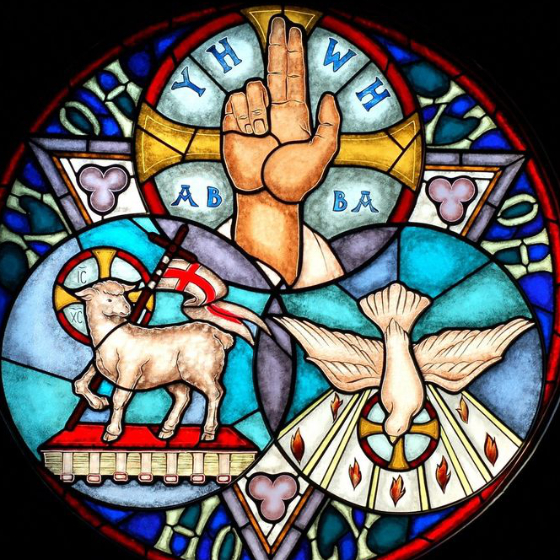
The Trinity
This past Sunday, we talked about the Trinity. Father, Son, and Holy Spirit. The God who acts. The God who sends. The God who lives in us.
Many claim to love God deeply, but there’s no denying that we have allowed ourselves to be more shaped by our culture and politics, than by God. Both demand our loyalty and worship and we’ve willingly bent the knee.
The Trinity Disrupts Our Comfort
When Isaiah saw God, his response was to say, “Woe is me.” Because when you truly encounter the holiness of God, it wrecks your illusions. You realize how small your idols are—comfort, safety, success, politics. You see how shallow our outrage is when we care more about someone kneeling during a national anthem than about children in cages at a border or neighbors crushed under generational poverty.
Isaiah didn’t just confess his personal sin. He said, “I live among a people of unclean lips.” He called out the culture.
And God still calls us to do the same.
To put it bluntly: if we claim to believe in a holy God, how can we be silent when the world burns? How can we excuse dishonesty, cruelty, racism, and greed just because it comes from our side of the aisle?
The Trinity Isn’t Meant for Safety
God didn’t appear to Isaiah just to give him a message. He sent him back with the message. And the message he was given wasn’t easy.
Too often, American Christianity wants a savior but not a Lord. We want Jesus to forgive us, but we don’t want Him messing with our wallets, our pride, or our politics. We want the Spirit to comfort us but not create a fire within us. But Scripture doesn’t give us that version.
The Father sends. The Son saves. The Spirit disrupts.
Following a Triune God means being born again—not just in name, but in how we speak, how we spend, how we love, even how we vote.
And if that makes us uncomfortable? Good. Because comfort isn’t one of the fruits of the Spirit.
The Spirit Still Blows—and It Might Blow Everything Up
Paul reminds us in Romans that the Spirit lives in us—not to make us passive consumers of religious content, but adopted children and co-heirs with Christ. It’s a radical redefinition of family and of who belongs and who we belong to. And it comes with a cost.
We are heirs—if we suffer with Him.
Christianity that costs us nothing is not Christianity at all. It’s a counterfeit one—designed to make us feel good while the world around us crumbles.
You can’t claim to follow Jesus and ignore injustice and the suffering around you.
You can’t lift hands in worship while keeping your fists clenched around money and power.
You can’t praise the Prince of Peace and cheer for policies or politicians that mock, dehumanize, and persecute the innocent.
The Spirit doesn’t roll us in bubble wrap. The Spirit sends us into difficult places, conversations, and sacrifices.
What If We Really Lived This?
Imagine a church that actually lived the Trinity:
- That confessed national and communal sin, not just individual mistakes. This includes historical and generational sins.
- That stood up for the poor, the outcast, and the stranger—not just in word but in action. Even those who don’t look, speak, or love like us.
- That saw political parties as leanings, not gods.
- That cared more about being Christlike than being right.
- That let the Spirit move through its routines and redefine what success is based on faithfulness and community influence.
If we truly lived that way, people wouldn’t walk away from church bored or bitter. They’d be shaken. Maybe even changed.
And yes—it would be costly. We’d lose friends, status, maybe even some comfort. But we’d gain purpose. Fire. And maybe even joy.
So…What Now?
The question from Isaiah’s vision still echoes: “Whom shall I send?”
And God isn’t asking for perfect people. He’s asking for willing ones.
If you’re reading this, you’re being asked too. The God we preach about is more than words. He moves. He sends. And if we follow Him—so must we.
Let’s be honest. Much of American Christianity today doesn’t look like the God we see anywhere in scripture. It looks more like cultural preservation than kingdom transformation.
But the Triune God isn’t interested in preserving our comfort or traditions. It’s about resurrection. And resurrection always starts with death—to ego, fear, and self-reliance.
So maybe it’s time we stop asking, “What will this cost me?” and start asking, “Where is God sending me?”
Let’s be the kind of Christians who can say—truthfully, trembling, maybe even reluctantly—
“Here am I. Send me.”
Closing Prayer
Holy God—Father, Son, and Holy Spirit,
You are not a God of silence or stillness, but a God who moves, speaks, and sends.
You disrupt our comfort, confront our complacency, and call us to something more.
Forgive us for the times we’ve made our faith small—
a quiet corner of our lives instead of the center.
Forgive us for serving our politics more faithfully than Your kingdom,
for seeking safety over sacrifice, and approval over truth.
Burn away what is unclean in us.
Breathe new life into what has grown cold.
Stir us with the wind of Your Spirit—
even if it blows us into hard conversations, uncomfortable places, and costly love.
Make us people who say yes to You.
Yes to justice.
Yes to mercy.
Yes to being sent—even when we’re afraid.
We believe in more than words.
We believe in You.
Now help us live like it.
In the name of the One who was sent,
who sends us still,
Amen.

 The Rest of the Sermon