
Faith That Interrupts
I’ve been thinking a lot about interruptions lately.
You know the kind: the phone rings just as you sit down, the car dies the morning of an important appointment, someone starts pouring out their heart when all you really want is to grab your groceries and get home. Those moments we didn’t plan for, don’t want, and usually try to avoid.
But sometimes, those interruptions are exactly where God shows up.
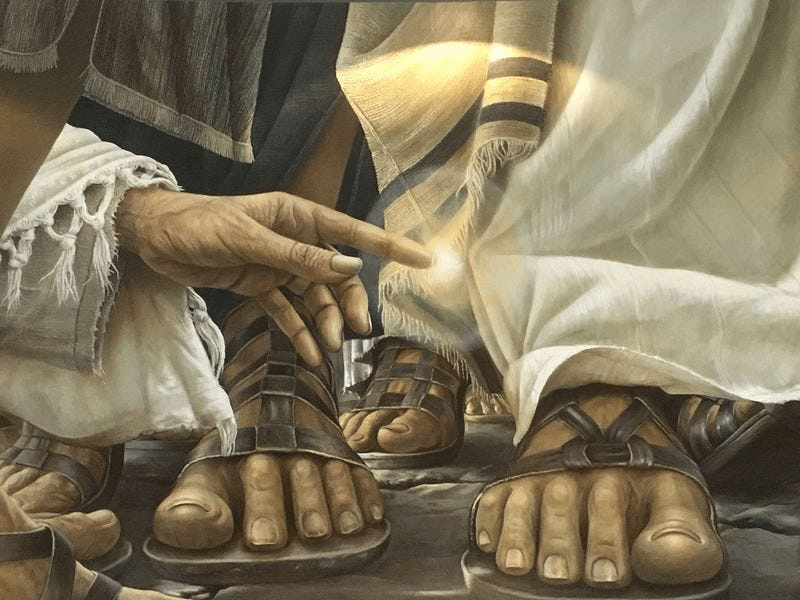
In Mark 5, Jesus is on His way to heal a dying girl. It’s urgent. Important. Life or death. But on the way, He’s interrupted. A bleeding woman reaches out and touches His cloak. She’s not even named in the story—just her condition. For twelve years she’s been sick, broke, and spiritually exiled.
And Jesus stops.
He doesn’t rush past her to stick to the original plan. He doesn’t say, “I’m too busy helping someone more important.” He stops, talks with her, calls her daughter, and restores her publicly.
And here’s the uncomfortable part: We often don’t do the same.
We blow past people like her all the time.
We say we believe in Jesus, but we live like we’re too busy to be interrupted. We step over the hurting. We change the channel when suffering gets too loud. We scroll on by. And sometimes even the Church does it.
How many times have we been so committed to keeping to our service order and allotted time that we missed an opportunity?
How many times have we been more worried about decorum than deliverance?
Jesus didn’t operate that way. He let Himself be interrupted by the bleeding woman—the invisible one. The untouchable. The uninvited.
And in that moment, He reminded her (and us) that God doesn’t overlook the ones society pushes aside.
The Margins Matter to God
We don’t live in first-century Israel, but we do live in a culture that creates its own kinds of outcasts.
We praise success, wealth, independence, and control. We shame weakness, struggle, and need.
People who are poor, sick, addicted, grieving, mentally ill, undocumented, or simply different—they often find themselves pushed to the edges, both in society and, sometimes, in the Church.
Let me put it plainly: Our culture is constantly deciding who’s valuable and who’s not. And if we’re not careful, the Church will just mirror that instead of resisting it.
But Jesus didn’t mirror culture—He interrupted it.
The religious elite of His day didn’t have time for the bleeding woman. They were focused on clean hands and proper rituals. But Jesus had time. He made time. And He drew her in when everyone else pushed her out.
If we’re going to be like Jesus, we need to start paying more attention to the people our culture—and even our congregations—are tempted to ignore.
Faith That Pushes Back
The bleeding woman had guts. She reached out with nothing left but hope. Jairus, the synagogue leader, dropped to his knees in front of a homeless rabbi. Neither one followed religious protocol. But both were willing to be desperate and honest.
Too often, our version of faith is too polite. Too safe. We think good faith is tidy, calm, respectable.
But real faith? It interrupts.
It reaches out when it shouldn’t. It speaks up when it’s told to be quiet. It challenges systems, institutions, and even traditions that leave people out.
If your faith never disturbs you, never challenges you to see others differently, it might not be faith—it might just be habit.
Faith that matters moves us—not just to believe something, but to be something different in the world.
Jesus Interrupts the Status Quo
Right now, American culture is obsessed with the self. With control. With winning. With getting our way.
But Jesus wasn’t here for power. He didn’t spend time winning arguments. He healed. He listened. He fed the hungry. He touched lepers. He defended the woman caught in adultery. He interrupted a funeral procession to raise a widow’s only son.
And in His most powerful act—His death and resurrection—He interrupted sin, death, and all the forces of evil that try to tell us who we are and who we aren’t.
That’s the Jesus we follow.
Which means our churches should be the most interruptible places in the world. Not just on Sundays—but every day. Because people’s needs don’t run on our schedules.
The bleeding woman didn’t care that Jesus had somewhere to be. She needed healing.
Jairus didn’t care that others might laugh at him. He needed hope.
And Jesus didn’t care what it cost His reputation—He made space for both.
So Here’s the Challenge
Ask yourself this week: Am I interruptible?
- When someone’s struggling, do I make space for their pain—or do I keep moving?
- When I hear prejudice, cruelty, or indifference, do I speak up—or stay silent?
- When people are pushed to the margins, do I stand with them—or stay comfortably in the center?
Because if we only follow Jesus when it’s convenient, are we really following Him?
The good news is that Jesus sees us even in our desperation. Whether we’re Jairus or the bleeding woman—or maybe someone who’s felt ignored for a long time—He’s still interrupting the world to bring hope and healing.
But that hope comes with a calling.
Be interruptible.
Be present.
Be brave enough to reach out when you’re hurting—and bold enough to stop when someone else is.
Because that’s where faith comes alive—not in the polished plans, but in the holy interruptions.
Closing Prayer
God of compassion and courage,
We confess that too often, we rush past the hurting, ignore the inconvenient, and protect our comfort rather than respond with love.
Forgive us for the times we’ve been too busy to see the brokenness around us.
Give us eyes to see the unseen, ears to hear the cries of the vulnerable, and hearts willing to be interrupted.
Make us more like Jesus—ready to stop, to speak life, to reach out in faith, and to welcome those the world leaves behind.
In the moments when we feel desperate or unseen ourselves, help us remember that You see us, love us, and call us “daughter,” “son,” “beloved.”
Interrupt our lives with grace and call us into something deeper.
In Jesus’ name,
Amen.

 The Rest of the Sermon