
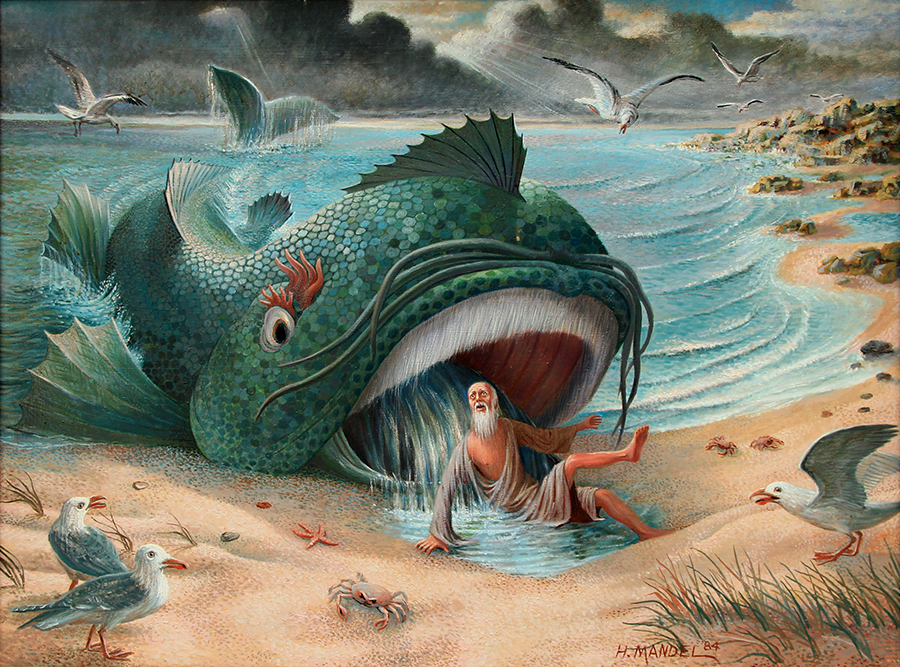
There’s something deeply uncomfortable about the story of Jonah, and it’s not just the big fish. It’s what the story reveals about us.
Jonah didn’t run from God because he was scared of failure. He ran because he was afraid God might actually succeed. That God might forgive people he didn’t like. The people of Nineveh were violent, cruel, and oppressive. They were the enemy. Jonah didn’t want to help them find mercy, he wanted to watch them get what they deserved.
And honestly, the story hits close to home today.
We love grace when it’s for us and those we care about.
But we struggle with it when it’s for someone else, especially if we don’t much care for them.
The Mirror of Jonah
Jonah is a mirror for modern faith.
He believed in God. He prayed. He knew all the right answers. But when God’s mercy stretched beyond his comfort zone, Jonah ran.
He didn’t want God to love “those people.”
That same impulse runs through much of American Christianity today. We talk about grace on Sunday and then celebrate cruelty on Monday. We say “love your neighbor,” but we’ve drawn the map so small that it barely fits anyone outside our circle. We post verses about forgiveness while cheering on leaders who brag about being ruthless to “those people”.
Somewhere along the way, we’ve confused strength with cruelty and conviction with spite.
But cruelty isn’t Christlike and spite is cowardice dressed up as righteousness.
Jesus told us to love our enemies, not own them, mock them, or destroy them.
He told us to bless those who curse us, not fire off angry rants or memes.
He told us to forgive seventy times seven, not cancel, humiliate, or dehumanize.
If that sounds impossible, it’s because it is, without grace and the work of the Holy Spirit.
That’s the point. Grace isn’t something we earn; it’s something we extend because we’ve received it ourselves.
When Cruelty Becomes a Virtue
Our culture is addicted to outrage.
Politicians build platforms on fear and anger. Commentators make millions by keeping people furious people they don’t even know.
And the church too often plays along.
We’ve baptized meanness in religious language and called it “truth.”
We’ve mistaken vengeance for justice and fear for discernment.
We’ve traded humility for influence and compassion for clout.
When cruelty becomes a political strategy and Christians applaud it, we’ve left the heart of Christ behind.
And when we find ourselves enjoying the suffering of our opponents, it’s not righteousness that’s speaking, it’s Jonah, sulking under his vine, mad that God didn’t destroy Nineveh.
That’s what Jesus meant when He said, “Love your enemies and pray for those who persecute you” (Matthew 5:44). He was revealing the only way to break the cycle of hate.
Grace Is the Hardest Thing to Believe
We talk about grace like it’s easy. It’s not.
Grace is hard because it forces us to admit that God loves people we don’t and don’t want to.
The racist, the abuser, the politician we despise, the neighbor who gossiped about us, God loves them, too. That doesn’t excuse evil or erase accountability, but it does mean that mercy is God’s business, not ours.
This includes the “innocent” too. The people we dislike just because they’re different. Because the speak different, love different, vote different, dress different, worship different.
Jonah couldn’t stand that truth.
He wanted control over grace, choosing who gets it, who doesn’t, and how much they deserve.
But grace doesn’t work that way. It’s not a commodity. It’s a gift from God.
Every time we extend grace to someone who we think doesn’t “deserve” it, we become a little more like the Christ we claim to follow.
And every time we withhold grace, we become a little more like Jonah, religious, resentful, and alone.
What’s Really in Our Hearts
Jesus said, “Out of the overflow of the heart, the mouth speaks” (Luke 6:45).
In our world of comment sections and podcasts, we might add, “and the fingers type.”
So what’s flowing out of our hearts?
Are we reflecting the compassion of Christ, or the bitterness of Jonah?
If we celebrate cruelty toward others, no matter how much we disagree with them, we reveal something deeply wrong within us. The cross doesn’t give us permission to hate; it calls us to die to hate.
Nineveh’s repentance shows what’s possible when people open their hearts to mercy. Jonah’s anger shows what happens when we close ours.
And maybe that’s where the story ends so abruptly, because it’s not finished.
The question isn’t what Jonah will do next.
It’s what we will do next.
Will we keep running from grace, or will we start living it?
A Better Way
Imagine if followers of Jesus in America stopped cheering for cruelty and started embodying compassion.
Imagine if we cared more about loving people than winning arguments.
Imagine if we stopped measuring faith by political alignment and started measuring it by mercy.
That’s not weakness. It’s resurrection power.
The same power that led from death on a cross to an empty tomb.
The same power that turns enemies into neighbors and strangers into friends.
Grace isn’t fair. It’s much more than that.
And that’s why the world needs it now more than ever.
Reflection
The story of Jonah asks us: Who are you angry that God might forgive?
The answer to that question might reveal the next place God is calling you to love.
Closing Prayer
Merciful God,
we confess that we love Your grace when it’s for us
but resist it when it’s for others.
Forgive us for the cruelty we’ve justified in Your name
and the people we’ve written off as beyond Your reach.
Soften our hearts.
Remind us that Your mercy is bigger than our politics,
our opinions, and our pride.
Teach us to love as You love,
even when it costs us something.
In the name of Jesus,
who ran toward the cross so we could stop running from grace.
Amen.

 The Rest of the Sermon