
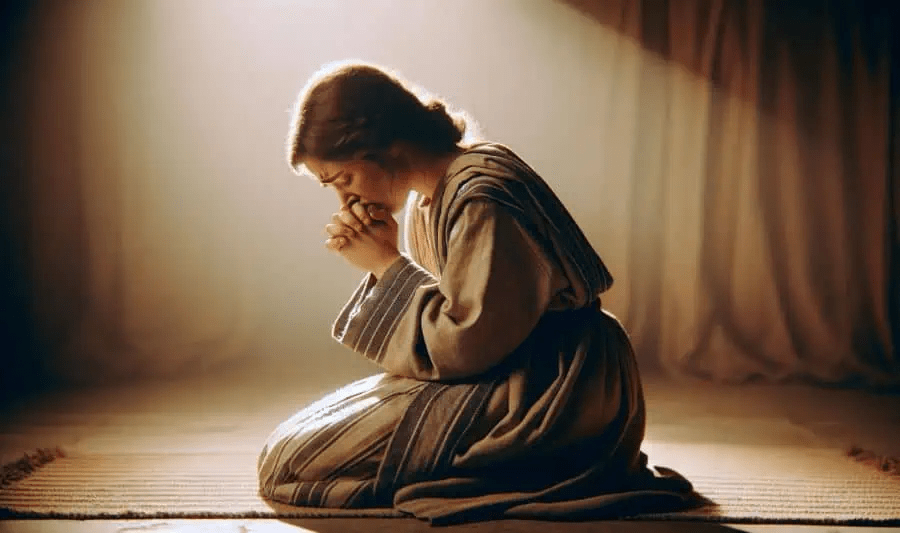
There’s a moment in the story of Hannah that almost always gets overlooked. It happens right after she prays, long before anything in her life changes. It’s quiet, easy to miss, and honestly, many of us may not believe it’s even possible.
But Scripture says it:
“She went her way, she ate something, and her face was no longer downcast.”
(1 Samuel 1:18)
Nothing about Hannah’s circumstances had changed.
There was no miracle.
No pregnancy.
No angelic announcement.
No dramatic sign from heaven.
What changed was her.
And for a world like ours, where people tend to pray only when they’re desperate and quit as soon as the answer doesn’t match their expectations, Hannah has something important to teach us.
The Pressure of Hannah’s World
Before we talk about her prayer, we need to understand her life.
In ancient Israel, a woman’s security, identity, and social standing were tied to having children. Childlessness wasn’t just sad, it carried a sense of shame, fear, and vulnerability. It made you feel like you didn’t matter.
And Hannah lived with a rival, Peninnah, who delighted in reminding her of everything she lacked. Scripture says Peninnah “provoked her severely to irritate her” (1 Samuel 1:6). It was intentional cruelty.
So every year, when the family traveled to Shiloh to worship, what should have been a holy celebration became another reminder that Hannah’s prayers were still unanswered.
Imagine walking into church every Sunday and being reminded by circumstances, by people, by your own thoughts, that the one thing you’ve begged God for still hasn’t happened.
That was her reality.
The Prayer That Wasn’t Pretty
When Hannah finally walked into the sanctuary at Shiloh, she didn’t show up polished or put together.
There were no scripted words.
No spiritual clichés.
Nothing you would want written on a prayer card.
The Bible says she prayed “in deep anguish” and “wept bitterly.” Her lips moved, but no sound came out. It was raw. Honest. Real.
The priest thought she was drunk.
Eli, the spiritual leader of the nation, looked at a woman praying from the depths of her soul and misread everything about her.
If you’ve ever been misunderstood, dismissed, or judged while you were hurting, Hannah knows exactly how that feels.
But she didn’t storm out.
She didn’t shut down.
She didn’t let someone else’s ignorance shape her relationship with God.
She simply said,
“I was pouring out my soul to the Lord.”
(v. 15)
And right there, something shifted inside her.
The Turning Point
After Eli finally blesses her, Scripture says:
“Then she went her way and ate something, and her face was no longer downcast.”
(v. 18)
It’s easy to miss that sentence because we’re too busy waiting for the happy ending. We want the miracle story. We want the baby. We want the answer.
But Hannah’s transformation didn’t start when she conceived Samuel.
It started the moment she entrusted her pain to God, even before anything improved.
That’s the part we don’t like.
We want prayer to work like a vending machine:
insert request → instant result.
We want spiritual life to mimic American life, fast, convenient, customizable, and predictable.
But the story of Hannah tells us something countercultural:
Prayer is not a transaction. Prayer is a relationship.
Often the greatest miracle isn’t what God does for us, it’s what God does in us while we wait.
We Often Give Up Too Soon
Let’s be honest.
Most people, Christians and non-Christians alike, treat prayer as a last resort, not a way of life.
We pray when we’re scared.
We pray when we’re desperate.
We pray when everything falls apart.
But if God doesn’t move fast enough or in the way we demanded, frustration sets in. Doubt grows. Cynicism creeps in. We quit.
We say things like:
- “Maybe God doesn’t care.”
- “Maybe I’m doing it wrong.”
- “Maybe it’s pointless.”
Or the classic American response:
“I’ll fix it myself.”
Hannah shows us a radically different approach.
She kept showing up.
She kept praying.
She didn’t give up, even in humiliation and heartache.
She prayed until her heart changed, even before her situation did.
Faith That Doesn’t Follow the Rules of Convenience
We live in a culture that values speed, productivity, and control.
Prayer asks us to slow down, surrender, and trust.
Our culture promotes self-reliance.
Prayer reminds us we’re not meant to carry everything alone.
Our culture tells us that if something isn’t working, you move on.
Prayer teaches us perseverance, humility, and hope.
And maybe the hardest part:
Our culture teaches us to measure everything by results.
Prayer teaches us to value presence, God’s presence with us in the unanswered place.
No wonder so many people struggle with prayer.
It doesn’t fit the cultural script.
Finding Peace Before the Answer
Hannah’s breakthrough was not the birth of Samuel.
Her breakthrough was the peace that filled her before Samuel ever existed.
That’s the kind of peace Paul talks about in Philippians 4:
“And the peace of God, which surpasses all understanding, will guard your hearts and your minds in Christ Jesus.”
(v. 7)
That peace isn’t based on outcomes.
It’s based on being heard.
Hannah didn’t walk away pregnant.
She walked away confident that God had not forgotten her.
That’s what prayer can do, if we don’t give up.
So What About Us?
If you’re praying for something right now, a child, a marriage, a future, a diagnosis, forgiveness, direction, relief, you might feel like God is silent.
You might feel like Hannah felt for years.
Here’s the invitation her story gives us:
Keep praying.
Keep showing up.
Let the prayer change you while you wait.
Maybe the peace you’re looking for comes not at the end of the prayer, but in the middle of it.
Maybe the healing begins before the answer arrives.
Maybe God is already doing something beneath the surface, something you won’t see until the “course of time” unfolds.
Reflection Question
Where in your life do you need to keep praying, not because the answer has come, but because you need the peace that comes from being heard?
Closing Prayer
Gracious God,
Teach us to pray like Hannah, honestly, persistently, and with open hands. Help us to trust You even when we don’t yet see the answer. Give us courage to keep praying when we feel empty, misunderstood, or discouraged. Let Your peace take root in us long before circumstances change. Shape our hearts as we seek You.
Amen.

 The Rest of the Sermon